
Kinder Surprise is one of the most recognizable sweet treats in the world, loved by millions of children and even adults for its unique combination of chocolate and a hidden toy inside. First introduced in 1974 by the Italian confectionery company Ferrero, the product quickly became popular across Europe and many other countries. The concept was simple yet exciting: a chocolate egg with a small plastic capsule hidden inside, containing a toy that children could assemble and play with. This blend of sweetness and surprise created a magical experience that made the brand iconic.
However, despite its worldwide success, Kinder Surprise has never been legally sold in the United States. The reason behind this is not about taste or popularity, but about safety regulations. In the U.S., the Food and Drug Administration (FDA) enforces a law that prohibits the sale of food items that contain non-edible objects embedded inside them. This regulation is part of the Federal Food, Drug, and Cosmetic Act, which aims to prevent potential choking hazards and protect consumers—especially children.
Because Kinder Surprise places a toy inside the chocolate shell, it falls under this restriction. The concern is that a child might bite into the chocolate without knowing there is a hard plastic capsule inside, potentially leading to choking or injury. For this reason, the FDA considers the original Kinder Surprise egg a violation of U.S. safety standards. Over the years, there have been cases where travelers tried to bring the eggs into the country, only to have them confiscated at customs.
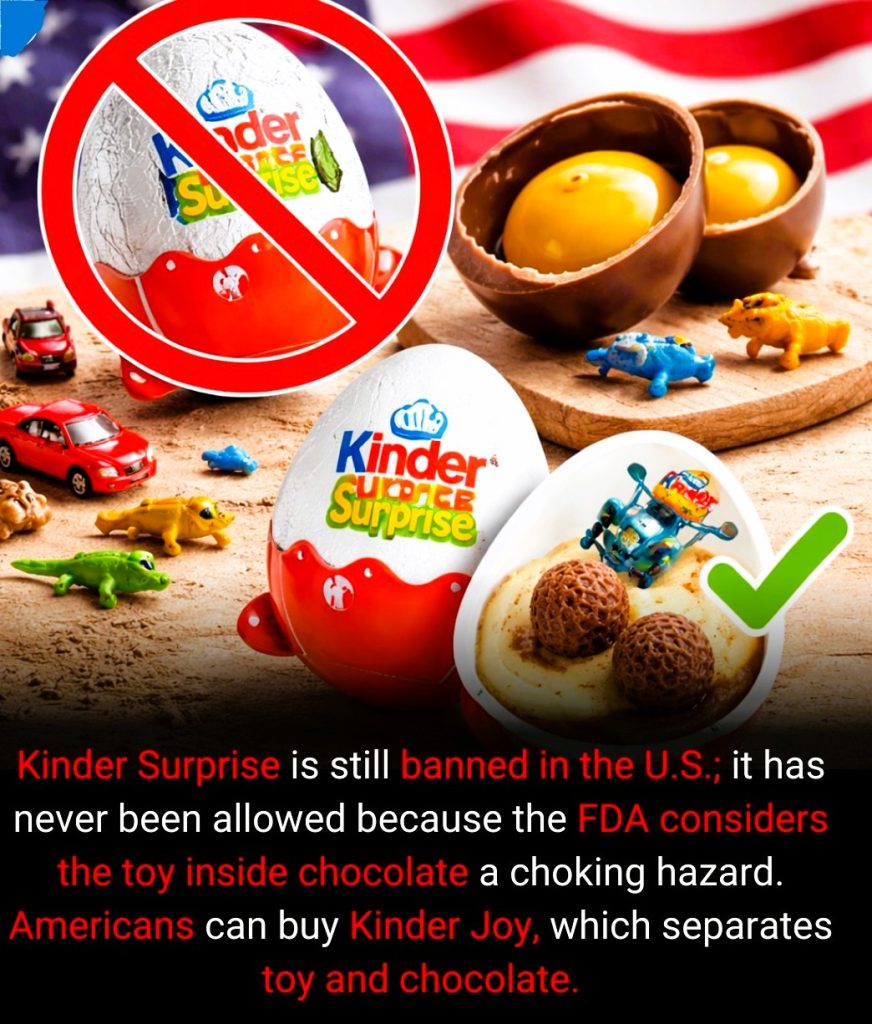
In response to this restriction, Ferrero developed a modified version of the product specifically for the American market: Kinder Joy. Unlike the original Kinder Surprise, Kinder Joy separates the toy and the chocolate into two distinct compartments within a plastic egg-shaped container. One side contains a creamy chocolate treat with wafer balls, while the other side holds the toy in a sealed compartment. This design ensures that the toy is not embedded inside the edible portion, making it compliant with U.S. regulations.
Kinder Joy was introduced in the United States in 2018 and quickly gained popularity. Many American children who had only heard about Kinder Surprise through social media or international travel were excited to finally experience something similar. While some fans argue that the magic of cracking open a chocolate egg to discover a hidden surprise is different from opening two separate halves, Kinder Joy successfully captures much of the same excitement.
The image highlights this difference clearly. On one side, there is a crossed-out Kinder Surprise egg in front of an American flag, symbolizing its banned status in the U.S. On the other side, there is Kinder Joy with a green checkmark, indicating that it is allowed. The visual contrast emphasizes the regulatory difference rather than a difference in brand identity. Both products are created by Ferrero and share the same goal: combining chocolate with a playful surprise.
It is important to note that the ban is not unique to Kinder Surprise specifically; it is about the general rule regarding non-edible items inside food. The law was originally designed decades ago to prevent dangerous situations where objects hidden in food could cause harm. While many countries have determined that Kinder Surprise is safe when used as intended, the U.S. regulatory framework remains strict on this matter.
Interestingly, Kinder Surprise continues to thrive in Europe, Latin America, Asia, and many other regions. In countries like Italy, Germany, France, and the United Kingdom, the product is a childhood classic. Special editions are released during holidays such as Easter and Christmas, and collectors often seek out limited-edition toys. The small toys inside the eggs have even developed a collector’s market, with some rare pieces becoming surprisingly valuable.
The debate around Kinder Surprise in the United States often sparks conversations about cultural differences in food regulation and risk tolerance. Some Americans see the ban as overly cautious, while others support the FDA’s decision to prioritize child safety. Regardless of personal opinion, the situation demonstrates how laws and consumer protection standards can shape the availability of products in different markets.
In conclusion, Kinder Surprise remains banned in the United States because of federal regulations that prohibit non-edible objects inside food products. However, through innovation and adaptation, Ferrero created Kinder Joy to comply with American laws while still offering a similar experience. The story of Kinder Surprise in the U.S. is a fascinating example of how global brands must adapt to local regulations, balancing creativity, safety, and consumer demand.