
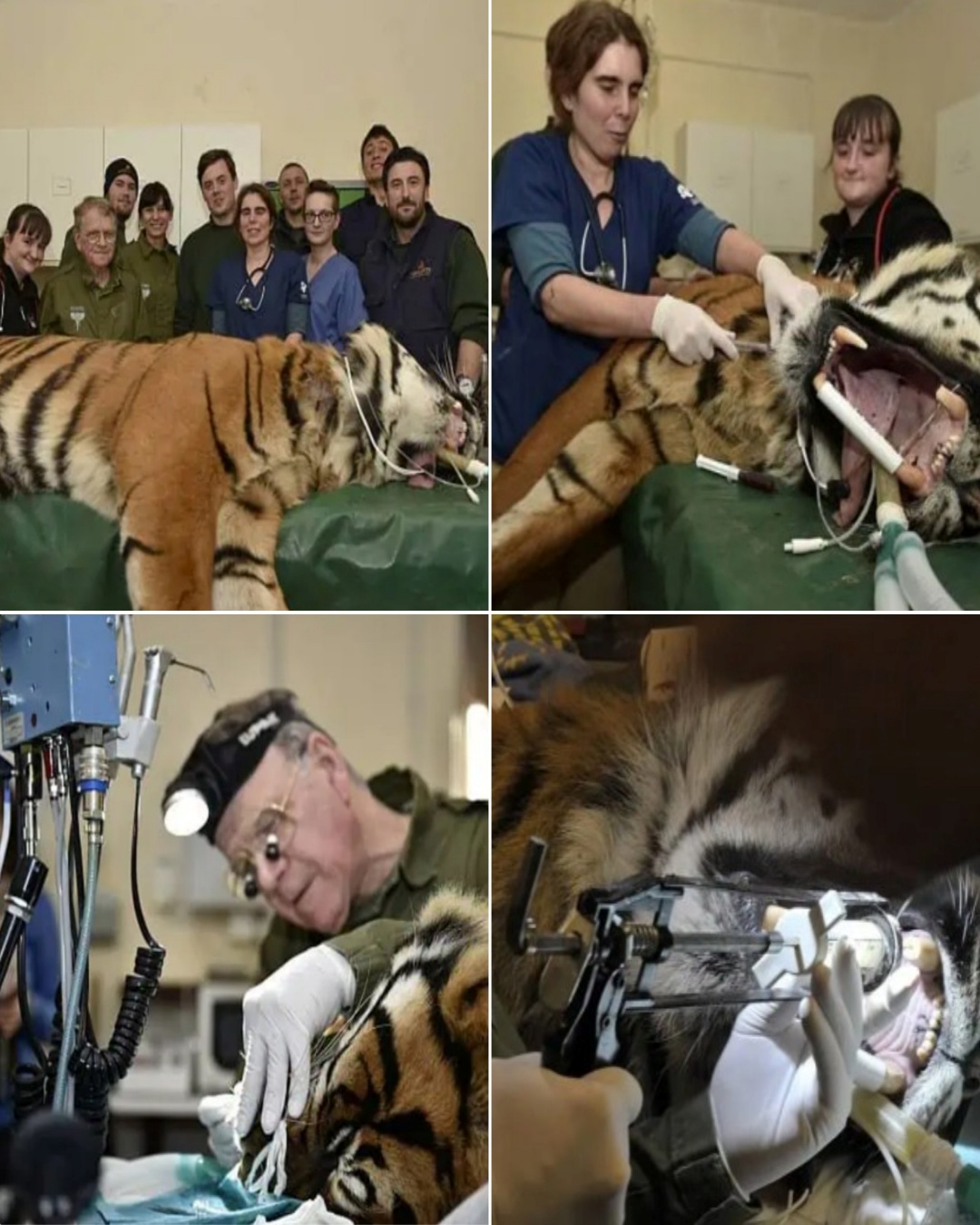
For nine years, Amir had been one of the most striking presences at Howletts Wild Animal Park. His coat burned with the color of firelight, his movements carried the calm authority of a predator born to rule the forest, and his gaze held the kind of quiet power that makes people stop mid-step. He was strength, grace, and instinct woven into one endangered life. But long before anything looked wrong to visitors, the keepers who knew him best sensed a change.
It started subtly. Amir hesitated at meals that once disappeared in moments. His posture softened, just slightly, as if his powerful frame were carrying an invisible weight. And in his eyes—those fierce, alert eyes—there were flickers of pain that did not belong there. Keepers watched closely, trusting the small details that animals cannot explain in words. What they eventually discovered was devastating: three broken teeth hidden deep within his massive jaw.
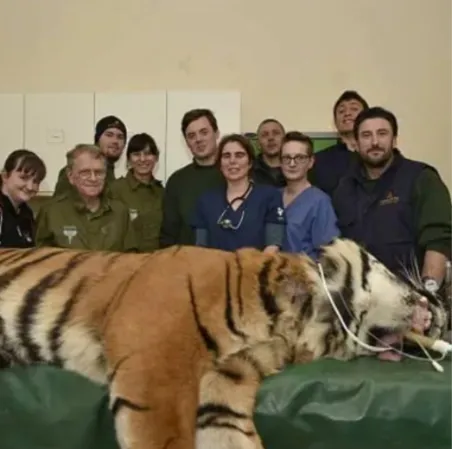
For a tiger, broken teeth are not a small injury. They are life-altering. A tiger’s survival depends on its bite, on its ability to grip, tear, and eat without pain. Left untreated, Amir faced constant suffering, the risk of infection, difficulty eating, and a slow decline no wild animal should be forced to endure. Pain had begun to steal not just his comfort, but his identity as a predator.
The team at Howletts refused to accept that fate.
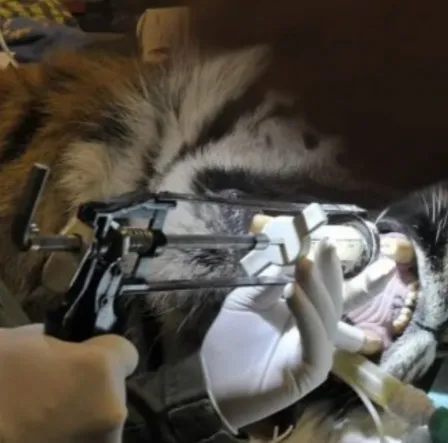
They called in Dr. Peter Kertesz, a world-renowned veterinary dentist, and assembled a team of specialists with one shared purpose: to give Amir his life back. Surgery on a tiger is never routine. Even sedated, Amir’s sheer size and strength meant every movement had to be deliberate, every second carefully planned. The room held a rare mix of tension and reverence as the team worked on an animal who could never consent, only trust.
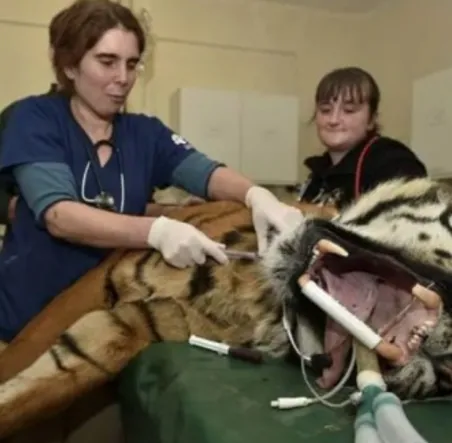
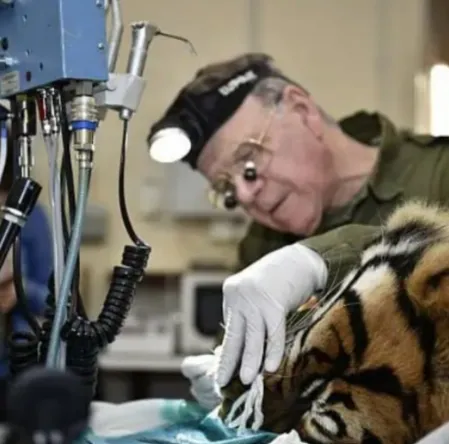
The procedure was delicate and demanding. The shattered teeth were repaired, damaged areas cleaned, and structures restored so Amir could eat without agony. It was not just technical skill that filled the operating room, but respect—for the life on the table, for the power it carried, and for the responsibility humans had taken on by keeping him safe.
When Amir finally opened his eyes, relief washed through the room. The most dangerous part was over, but the real test—recovery—had just begun.
At first, everything moved slowly. Soft meals replaced the bone-crushing bites he once relied on. His movements were monitored, his behavior watched with the same care that had first revealed his pain. And then, almost imperceptibly, the change began. His appetite returned. His posture straightened. Energy flickered back into his muscles. The tiger who had paced quietly through discomfort began to leap again, to chew confidently, to roar without hesitation.
What returned to Amir was more than physical strength. It was confidence. You could see it in the way he moved through his enclosure, in the brightness returning to his gaze, in the calm assurance of a predator no longer afraid of his own hunger. Pain had dimmed his fire. Compassion reignited it.
Amir’s story is not only about dental surgery. It is about partnership—between keepers who noticed the smallest changes, veterinarians who brought rare expertise, and a shared belief that every animal deserves dignity and relief from suffering. It is a reminder that conservation is not just about protecting species in theory, but about caring deeply for individual lives.
Today, Amir stands strong again. He is not merely surviving, but thriving—carrying the resilience of his species and the imprint of human care. His roar, once muted by pain, now echoes with power, telling a quiet but enduring truth: when met with respect and compassion, even the most endangered lives can rise again.
May you like
Truth After Three Decades — Melissa Witt and the Justice That Came Too Late 5063
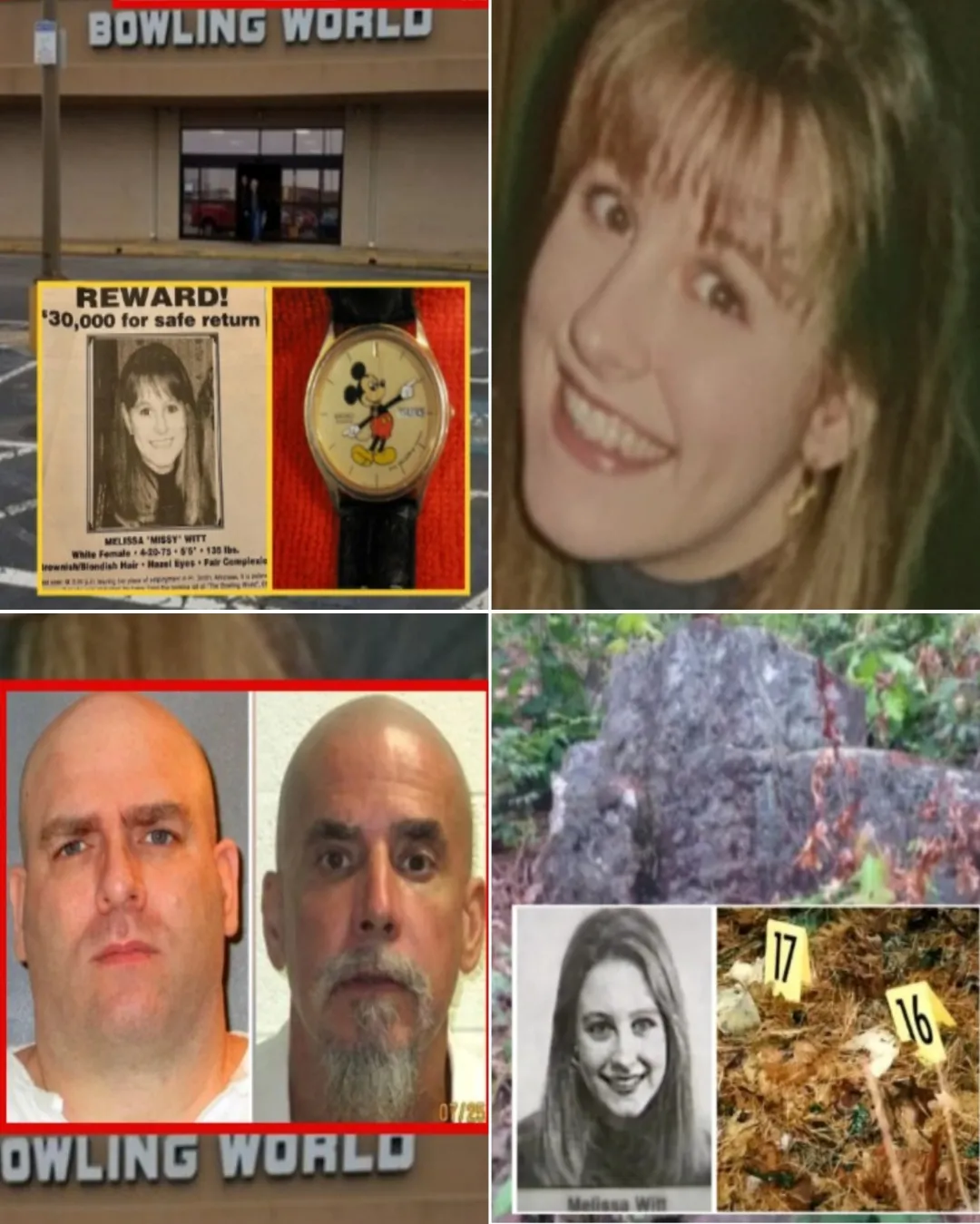
In December 1994, nineteen-year-old Melissa Witt finished her shift and walked out into the winter night, unaware that she was stepping into a mystery that would haunt her family and community for nearly thirty years. Like countless evenings before, there was nothing unusual about her routine. She left work. She got into her car. And then—she vanished.
When Melissa failed to come home, concern quickly turned into fear. Her car was soon discovered abandoned, its presence sparking an initial hope that perhaps she had been injured in an accident and would be found nearby. Search efforts intensified. Friends, family, and authorities clung to the belief that answers would come quickly, that whatever had happened could still be undone.
But days passed. Then weeks.
The truth revealed itself in the most devastating way possible. Melissa’s body was found, extinguishing any remaining hope and replacing uncertainty with grief. What had first appeared to be a disappearance became a homicide investigation—one that raised far more questions than answers. Who took her? Why? How could someone simply vanish into the night with no immediate trace?
For years, Melissa’s case remained unsolved.
Her family lived in a state of suspended grief, a uniquely cruel form of mourning where loss is compounded by not knowing. Birthdays passed. Holidays arrived and left. Time moved forward for the world, but for those who loved Melissa, it remained stuck in December 1994. Every new lead raised hope. Every dead end reopened the wound.

Decades went by.
Then, in 2024, science finally spoke where silence had ruled for so long.
Advances in DNA technology allowed investigators to re-examine evidence that had waited patiently for years. The genetic trail led to a name—Melissa’s killer was identified. After nearly thirty years, the truth was no longer a question. The mystery was solved.
But justice came with a devastating caveat.
The man responsible for Melissa’s murder had died twenty-five years earlier.
There would be no arrest. No trial. No courtroom where evidence would be laid bare and accountability demanded. The revelation brought answers—but not the kind that heal. For Melissa’s family, the truth arrived too late to confront the person who had stolen her life, too late to hear a sentence pronounced, too late to feel that the system had fully answered their loss.
There is a particular cruelty in justice delayed beyond reach.
Knowing who did it does not bring Melissa back. It does not restore the years stolen from her future or from the people who loved her. And yet, the truth still matters. It restores her story from speculation to certainty. It names what happened. It ends the question mark that followed her life for so long.
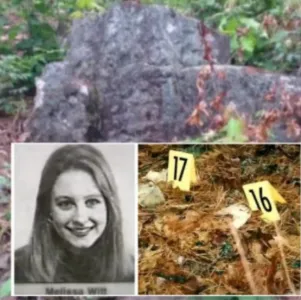
Melissa Witt is no longer just a cold case.
She is a young woman whose life was taken, whose absence shaped decades of grief, and whose story stands as a reminder of both the power and the limits of justice. DNA can reveal the truth. Time can preserve evidence. But when answers arrive after death, closure remains painfully incomplete.
For her family, the truth is a double-edged gift—clarity without consequence, knowledge without resolution. And yet, Melissa’s name is finally spoken alongside the truth of what happened to her.
That matters.
Because remembering her is not just about how she died—but about acknowledging that she lived, that she mattered, and that even decades later, the truth refused to stay buried.