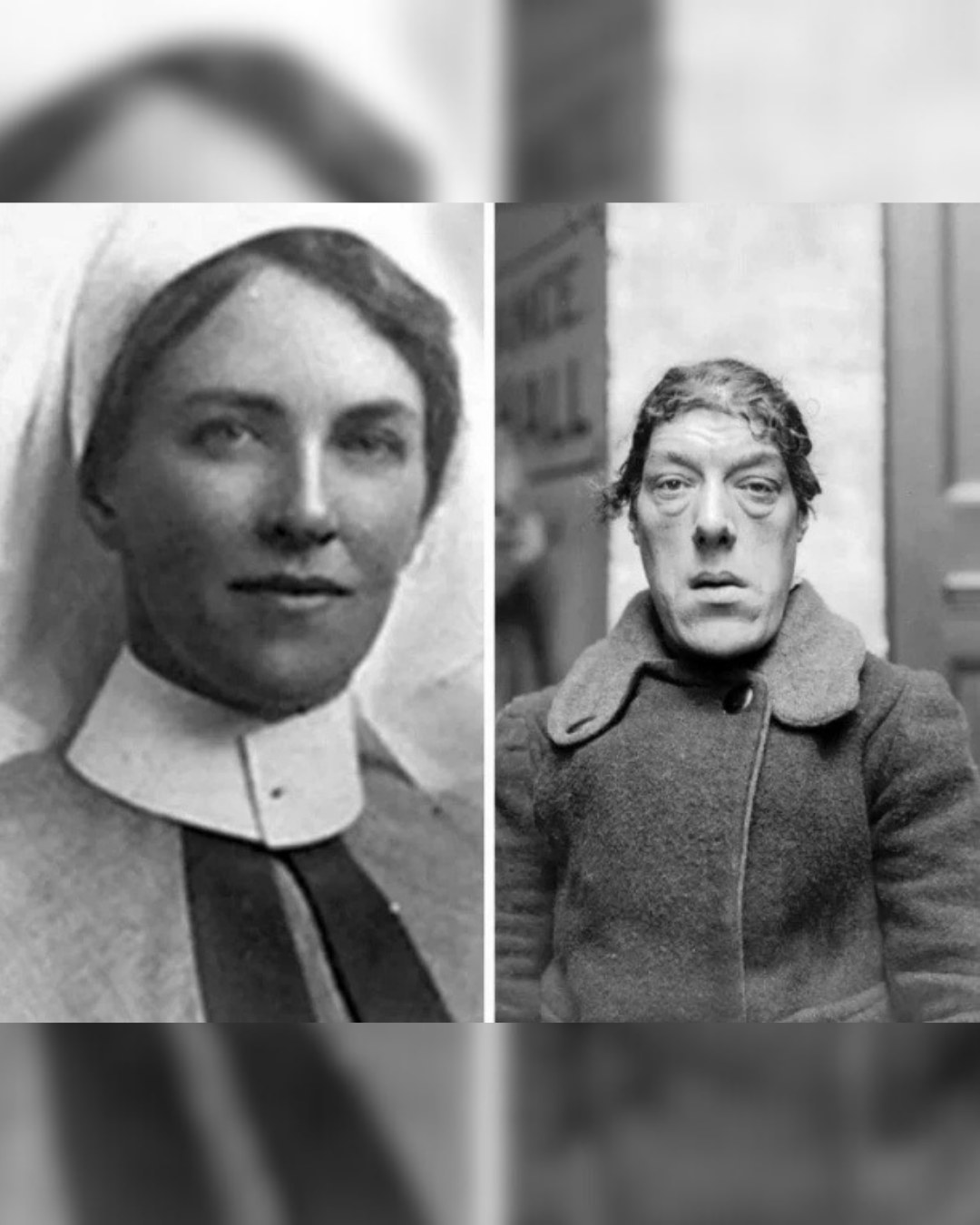
Mary Ann Bevan was born in 1874 in London. She lived a normal, quiet life and worked as a nurse. She married, had four children, and by all accounts, she was happy. No one ever told her that life could change so cruelly and so suddenly.
After her marriage, Mary Ann developed a rare medical condition called acromegaly, a hormonal disorder that causes bones—especially in the face, hands, and feet—to grow abnormally. At the time, doctors didn’t fully understand the disease, and treatments were limited. Gradually, her appearance changed. Her face became larger and more distorted, and people began staring at her in public.
Then tragedy struck again: her husband died suddenly, leaving her alone with four children to support.
What didn’t they tell her?
They didn’t tell her that society could be so unforgiving.
Because of her appearance, Mary Ann could no longer work as a nurse. Employers rejected her. People judged her not by her skills or kindness, but by how she looked. With no income and children to feed, she faced an impossible choice.
Eventually, Mary Ann accepted work in freak shows, first in England and later in the United States. She was advertised as “The Ugliest Woman in the World.” The title was cruel, humiliating, and deeply unfair—but it paid enough to keep her children alive.
In the USA, she worked with circuses like Barnum & Bailey, where crowds came not to know her story, but to stare. What they didn’t tell the audience was that she was a trained nurse, a mother, and a woman who had once lived an ordinary life.
Behind the stage, Mary Ann was described as intelligent, gentle, and devoted to her children. She endured public mockery so her children could have food, education, and a future. That was the part no one advertised.
She died in 1933, and despite everything, she ensured her children lived better lives.
What didn’t they tell you?
They didn’t tell you that strength doesn’t always look heroic.
They didn’t tell you that dignity can exist even in humiliation.
They didn’t tell you that society often punishes people for things they cannot control.
Mary Ann Bevan’s story isn’t about ugliness.
survival, sacrifice, and the cruelty of judgment.