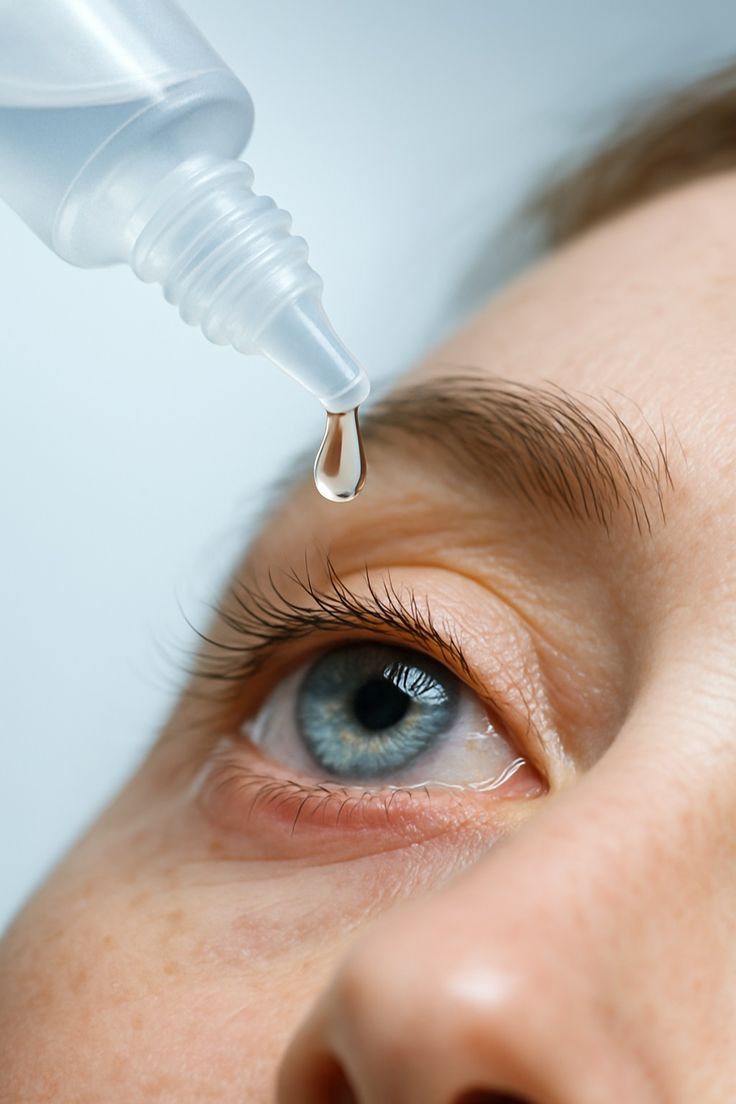
Eye drops are liquid medications or solutions applied directly to the surface of your eyes, usually one or two drops at a time. Because they’re used topically, they start working right where the problem is.
Different eye drops contain different ingredients, which means they can help with a wide range of eye conditions—from dryness and irritation to infections and inflammation.
What Do Eye Drops Do?
The effect of eye drops depends on what’s inside them. Some are available over the counter (OTC), while others require a prescription.
What Can OTC Eye Drops Do?
Over-the-counter eye drops are commonly used for everyday eye issues. They can:
- Reduce discharge: Astringent ingredients help break down mucus and clear eye buildup.
- Lubricate the eyes: Artificial tears reduce dryness and make blinking more comfortable.
- Soften dry tissues: Special emollients help soothe irritated or cracked areas.
- Relieve redness: Vasoconstrictors shrink tiny blood vessels, reducing redness and inflammation.
- Maintain moisture balance: Some drops help keep the right level of fluid in your eyes.
- Clean and rinse: Certain drops are designed to safely flush out dust or irritants.
What Can Prescription Eye Drops Do?
Prescription eye drops are stronger and target more serious conditions. They can:
- Relieve pain: Anesthetic drops temporarily numb the eye.
- Treat infections: Antibiotic drops fight bacteria.
- Control allergies: Antihistamines reduce itching and irritation.
- Reduce inflammation: Corticosteroids help calm swelling.
- Dilate pupils: Used during eye exams or certain treatments.
- Regulate the immune system: Prevent damage from immune-related eye issues.
- Lower eye pressure: Essential for managing glaucoma.
- Support healing: Some specialized drops help repair eye tissues.
Benefits of Eye Drops
Eye drops offer several advantages:
- Effective relief: The right drops can quickly improve symptoms.
- Generally safe: Especially when used correctly and as directed.
- Easy to use: Simple application with proper guidance.
Possible Risks and Drawbacks
Despite their benefits, eye drops aren’t always risk-free:
- They may hide problems: Some drops relieve symptoms without treating the cause.
- Wrong choice can worsen issues: Using the wrong type may delay healing or cause harm.
- Risk of contamination: Improper use can introduce bacteria into your eyes.
- Quality concerns: Not all products follow strict safety standards.
When Should You See a Doctor?
You should consult an eye specialist if:
- Your symptoms don’t improve or get worse
- The drops stop working
- You experience side effects
- You’re unsure which drops to use
Are Eye Drops Always Safe?
Not necessarily. Think of eye drops like tools—each one has a specific purpose. Using the wrong type may not help, and in some cases, it could even make things worse.
That’s why it’s always best to choose eye drops based on your specific condition, ideally with professional advice.
Tips for Safe Use
To protect your eyes, follow these simple tips:
- Wash your hands before use
- Follow instructions carefully
- Never share prescription drops
- Avoid touching the dropper tip to your eye
- Keep the bottle closed and clean
- Don’t use expired drops
- Buy from trusted sources
Final Thought
Eye drops can be very helpful when used correctly, offering quick and effective relief. But “over-the-counter” doesn’t always mean completely safe. Choosing the right product—and using it properly—can make all the difference in keeping your eyes healthy and comfortable. 👁️✨