The beloved TV dermatologist opens up in this week’s issue about her terrifying stroke and her physical – and emotional – road to recovery
By
NEED TO KNOW
- Dr. Pimple Popper Sandra Lee opens up for the first time about suffering a stroke
- The beloved dermatologist was filming when she first experienced symptoms last November
- The new season of Dr. Pimple Popper: Breaking Out premieres April 20 on Lifetime
Sitting at the end of the couch in her Los Angeles living room, Dr. Sandra Lee is hyperaware of every word she says.
“I notice it right now that I don’t speak exactly the way I used to,” she says. “You’re really embarrassed to speak because you notice it.”
She’s referring to the slight hesitancy and mild slurring of speech that first appeared amid a frightful day last November, when the viral dermatologist and star of Lifetime’s hit reality series Dr. Pimple Popper: Breaking Out discovered she was having a stroke.
“It is very stressful to open yourself up,” says Lee, 55, who’s sharing the details of her five-month ordeal for the first time in this week’s issue of PEOPLE, ahead of her show’s season premiere on April 20th. “Especially as a surgeon, you always want to show yourself coming from an area of strength.”
:max_bytes(150000):strip_icc():focal(599x0:601x2):format(webp)/dr-pimple-popper-PEOPLE-3-e6cc21ec9efb4db3aa950a190b3fcdba.jpg)
Lee has showcased that skill and confidence as she rids patients of all the ooey-gooey, sometimes hairy things that can live on and under the skin. Be it pimples, lipomas or melanoma, Lee has excavated it all on camera—to rave reviews.
“It’s so fascinating to me that [watching the extractions] relaxes some people,” says Lee, a UCLA and Drexel University College of Medicine alum, who got her start posting her willing patients’ procedures to YouTube before her show first debuted on TLC in 2018. “People watch the videos over and over again because it helps them go to sleep at night. Others watch it like it’s a scary movie or a roller coaster.”
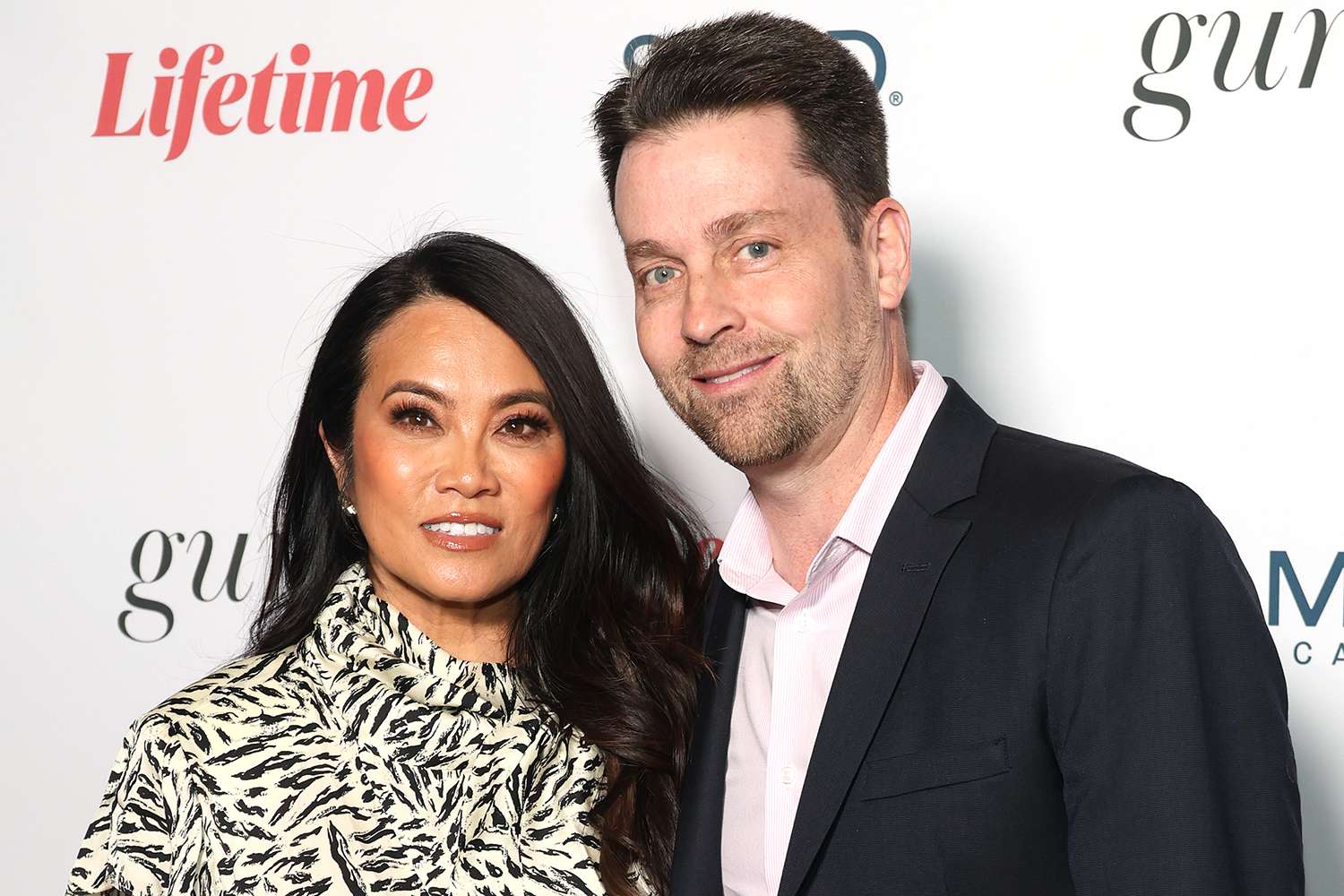
Married to fellow dermatologist Jeffrey Rebish, 53, with whom she shares two adult sons, Lee says, “I’m not a natural pop-aholic [someone who loves watching extractions]. But I feel really lucky that I get to actually see how what I do transforms somebody’s life.”
:max_bytes(150000):strip_icc():focal(999x0:1001x2):format(webp)/dr-pimple-popper-show-s1-ef3cdf0aff6944d789c32c2ce61a4a3a.jpg)
Lee was in the middle of that fulfilling work last Nov. 20 when she began feeling something was off. “It happened while I was filming the show,” recalls Lee, who was seeing patients at her Upland, Calif., practice as the cameras rolled. “I had what I thought was a hot flash. I got super sweaty and didn’t feel like myself.”
After wrapping, she went to her parents’ place, which is near her office and an easy commute during filming. That evening, “I just felt very restless,” she says. “In one leg I kept feeling shooting pains.” She couldn’t sleep, and when she got up to get something to eat, “I noticed that I was having a tough time walking down the stairs.”
By morning she knew something was seriously wrong with her left side. “I would hold my hand out, and it would just slowly collapse. I noticed that I had a tough time articulating and just enunciating. I thought, ‘Am I having a stroke?’ ”
:max_bytes(150000):strip_icc():focal(397x0:399x2):format(webp)/dr-pimple-popper-pt-2c1e386bd030420a8a6612dfa355b21f.jpg)
Her father, who’s also a dermatologist, told her she needed to go to the emergency room immediately. There, an MRI revealed that she had indeed suffered an ischemic stroke, where blood vessels supplying the brain are blocked, depriving cells of critical oxygen and nutrients.
“It was just a shock,” says Lee. “As a physician I couldn’t deny that I had slurred speech, that I was having weakness on one side, but I was like, ‘Well, this is a dream, right?’ ” More like a living nightmare: “What essentially happened,” she adds, “is I had a part of my brain that died.”
Lee’s neurologist Dr. May Kim-Tenser of USC’s Keck medical school says, “The number one risk factor is high blood pressure,” adding that doctors are seeing “almost a 15 percent increase in stroke prevalence among patients that are age 45 up to 64.”
Related Stories
:max_bytes(150000):strip_icc():format(webp)/dr-pimple-popper-husband-5d827d53aea240d08922188ef7453ae8.jpg)
Lee immediately halted filming and spent the next two months in recovery, undergoing physical and occupational therapy to regain balance and movement, “very basic things,” says Lee, who was especially concerned about her hands. “I don’t like that I don’t have total control of my left hand or the grip wasn’t as strong. If I feel like I’m not at my best—it’s very scary.” Adds Tenser: “She’s lucky. Her symptoms are pretty much resolved.”
Looking back, Lee can see the factors that led to her stroke. “My blood pressure and my cholesterol were not under control, and I have a lot of stress in my life, dealing with my patients and the show,” says Lee, who’s also gained perspective. “I want to think about it as a blessing in disguise. Because it reminds you to take better care of yourself.”
:max_bytes(150000):strip_icc():focal(999x0:1001x2):format(webp)/dr-pimple-popper-PEOPLE-2-ea0b4090e5b145098d5a5c3a3517d2a5.jpg)
She admits returning to the pressures of work in January wasn’t easy. “It was very scary for me,” says Lee, who initially questioned whether she could perform some of the more intricate surgeries. “There’s a lot of PTSD because it happened while I was filming the show.”
But with support from her staff and a former dermatology coresident who helped with her patient load, she says, “Thankfully I’m pretty much back to normal. . . . It really makes you realize how precious life is.”
https://people.com/embed?url=https%3A%2F%2Fwww.youtube.com%2Fwatch%3Fv%3DQyRN5iLbH54&id=mntl-sc-block_44-0-iframe&options=e30%3D&docId=11949147
Lee is currently on blood thinners and continuing physical therapy at home. She hopes sharing her experience helps erase some of the stigma around strokes.
“In Asian cultures in particular they don’t tell people they’ve had a stroke because it can be seen as a sign of weakness,” she says. “I want to get the word out that if you have symptoms like I had, make sure you see your doctor. Take care of yourself.”