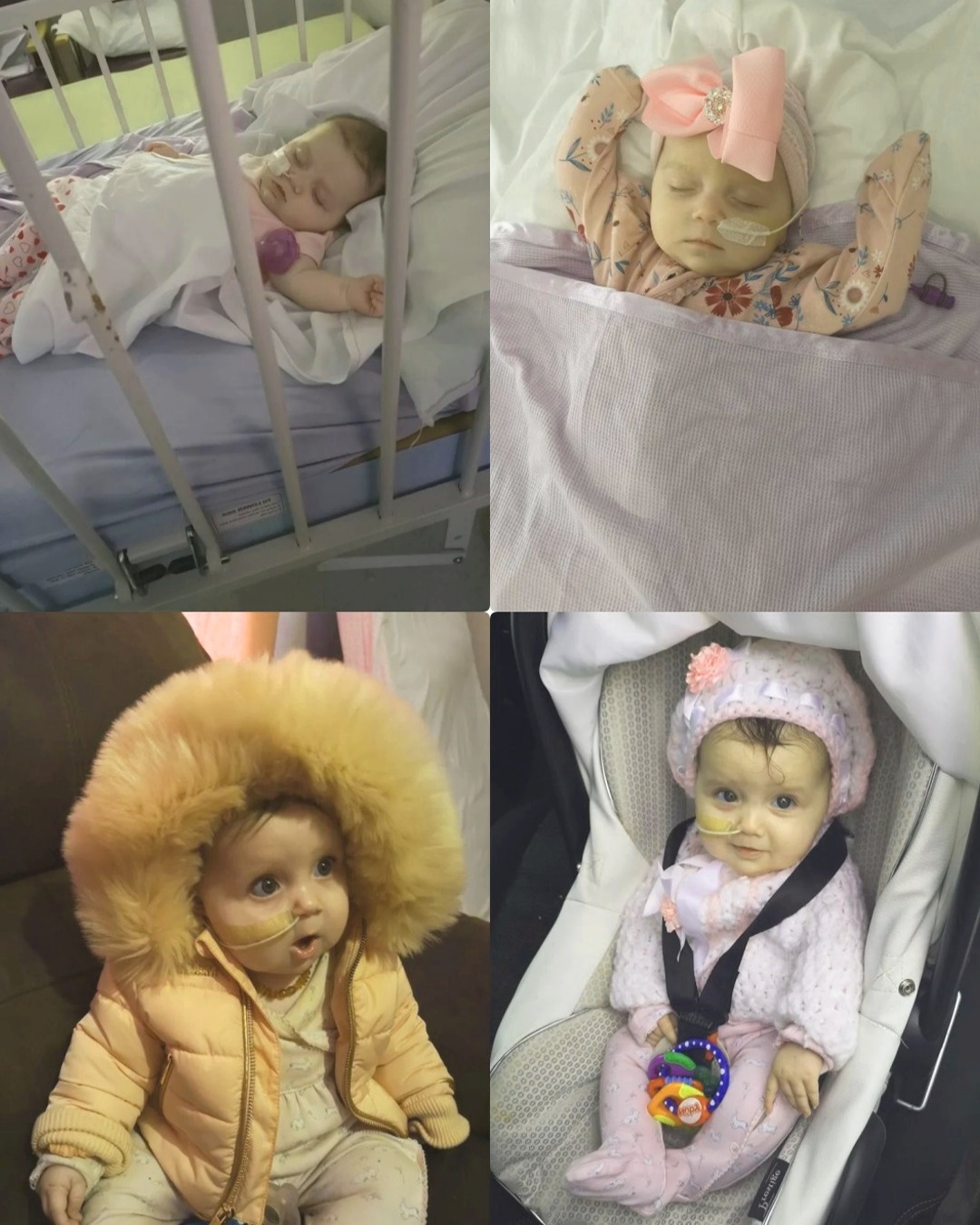
From the very first month of her life, Bonnie-Rose’s world looked nothing like it should have. While most babies were learning how to latch, sleep, and be soothed by familiar voices, Bonnie-Rose was already fighting battles hidden deep inside her tiny body. Feeding was never simple. Breathing was never something her parents could take for granted. Her skin would turn pale, sometimes frighteningly blue, and her little heart struggled in ways no newborn heart should ever have to.
At first, the signs were subtle. A missed feed here. A moment of exhaustion there. But instinct told her parents that something wasn’t right. They watched her closely, counting breaths, memorizing the rhythm of her chest rising and falling, holding her through nights filled with worry rather than rest. Each day brought questions, and each question carried fear they were not ready to face.
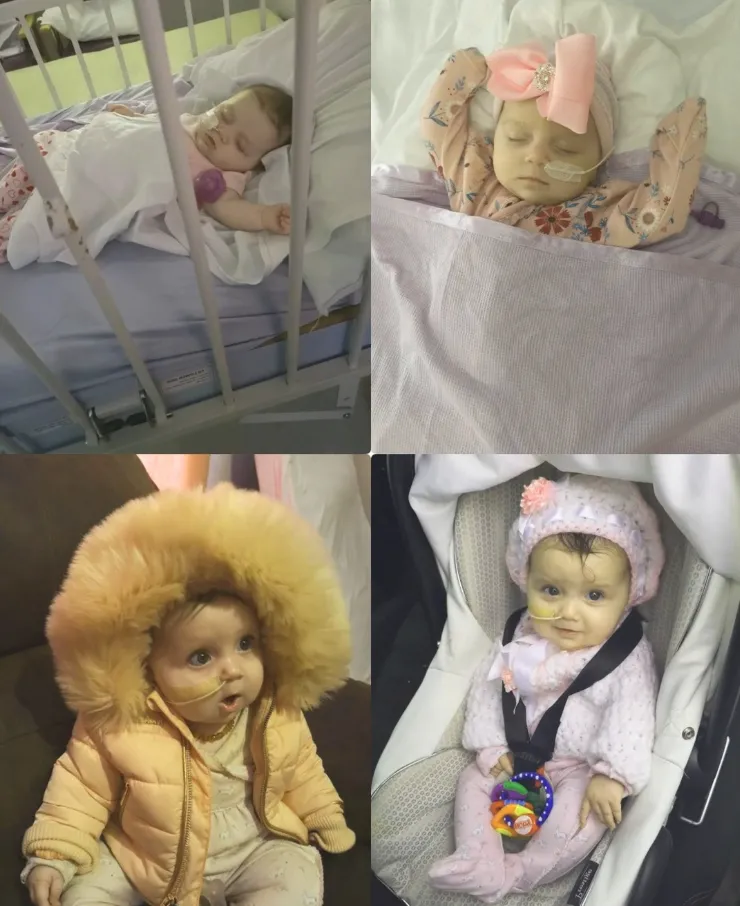
Soon, hospitals became part of Bonnie-Rose’s life. Tubes, monitors, and careful hands surrounded her tiny frame. An NG tube helped her get the nourishment her body could not manage on its own. Feeds became scheduled, measured, and watched closely, every milliliter a small victory. What should have been instinctive for a baby — eating, growing, thriving — had to be fought for instead.
Her heart, doctors explained, wasn’t quite right. It worked hard, but not easily. Too hard for someone so small. And yet, Bonnie-Rose kept going.
She fought quietly.
There were no dramatic cries or visible battles. Her bravery showed itself in smaller ways — in the way she endured feeds that exhausted her, in the way she recovered from moments that left her parents shaken, in the way she still found the strength to offer a soft smile afterward. Those smiles meant everything. They were reassurance. They were hope. They were reminders that she was still here.
Each hospital stay blurred into the next. White walls replaced the comfort of home. Beeping machines became the soundtrack of her early life. Her parents learned new routines they never wanted to know — how to manage tubes, how to read subtle changes in color, how to live on constant alert. Sleep came in fragments. Fear lived close, never fully leaving.
And yet, Bonnie-Rose continued to grow.
Slowly. Carefully. Courageously.
Wrapped in blankets too big for her, she rested in hospital cribs and car seats alike, her tiny body supported by equipment that had become part of her daily life. Outings were planned around feeds. Moments of joy were cherished fiercely. Every small improvement — a stronger color, a slightly easier feed, a longer stretch of calm — was celebrated like a milestone.
Her bravery was never loud. It didn’t demand attention. It lived quietly in a heart that refused to give up.
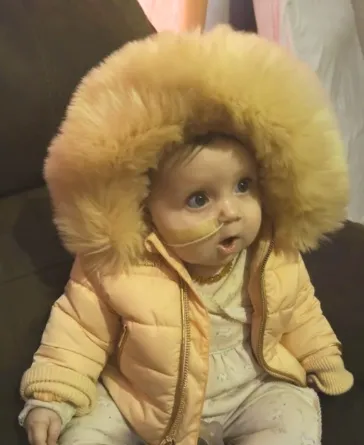
As weeks turned into months, something remarkable began to happen. Bonnie-Rose grew stronger. Her body, once overwhelmed, started to cope a little better. Her eyes grew brighter. Her expressions more curious. She began to experience pieces of babyhood that once felt impossibly far away — being bundled into warm coats, sitting safely in her car seat, holding toys with growing confidence.
The journey was far from over. Her heart still needed careful monitoring. Feeding still required support. There were still appointments, still worries, still moments when fear crept back in without warning. But Bonnie-Rose had already proven something extraordinary.
She was resilient.
She had faced more in her first months than many will face in a lifetime, and she had done it with quiet determination. She taught everyone around her that strength does not have to roar. Sometimes, it simply keeps beating — softly, steadily, refusing to stop.
May you like
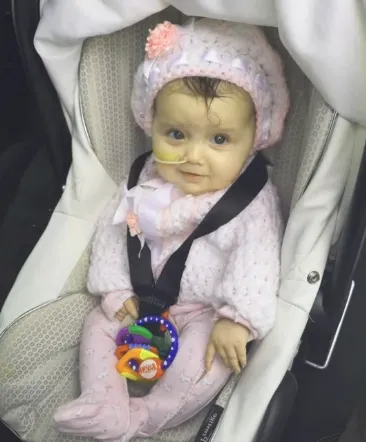
Her parents no longer measured time in weeks alone, but in victories. Each day Bonnie-Rose grew stronger was a gift. Each smile was a reminder of how far she had come. Each breath taken easily felt like hope made real.
Bonnie-Rose’s story is still unfolding. There are more chapters ahead — some challenging, some hopeful, all shaped by the courage she carries within her tiny frame. She is not defined by tubes or diagnoses. She is defined by her fight, her gentleness, and the love that surrounds her every step of the way.
In her small heart lives a lesson for everyone who meets her: resilience is not about size, age, or strength you can see. Sometimes, it’s about continuing — one breath, one feed, one smile at a time.
And Bonnie-Rose continues.
Before He Could Learn to Speak, Tymek Learned How to Fight 4712
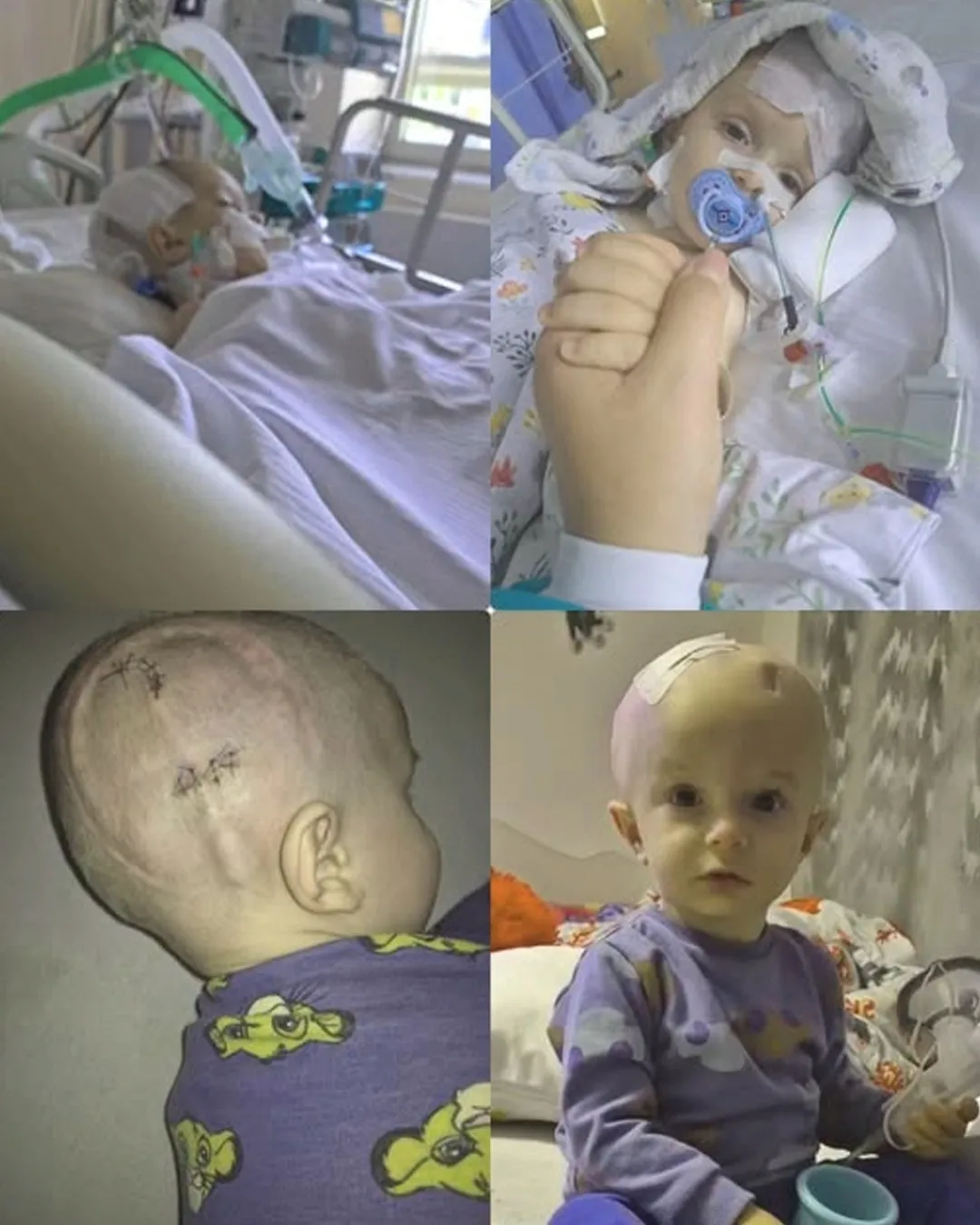
Tymek is not even two years old — an age meant for first words, wobbly steps, and discovering the world with wonder. His life should have been filled with laughter echoing through rooms, bedtime stories, and hands reaching out for comfort without fear. Instead, before he could fully understand what was happening to him, Tymek was forced into a battle for survival that many adults would struggle to endure.
Shortly after his first birthday, his parents’ world shattered with a diagnosis no family is ever prepared to hear: a malignant brain tumor. One moment, they were celebrating milestones. The next, they were learning medical terms they had never wanted to know, standing in hospital corridors where hope and terror lived side by side.
Time changed its meaning that day.
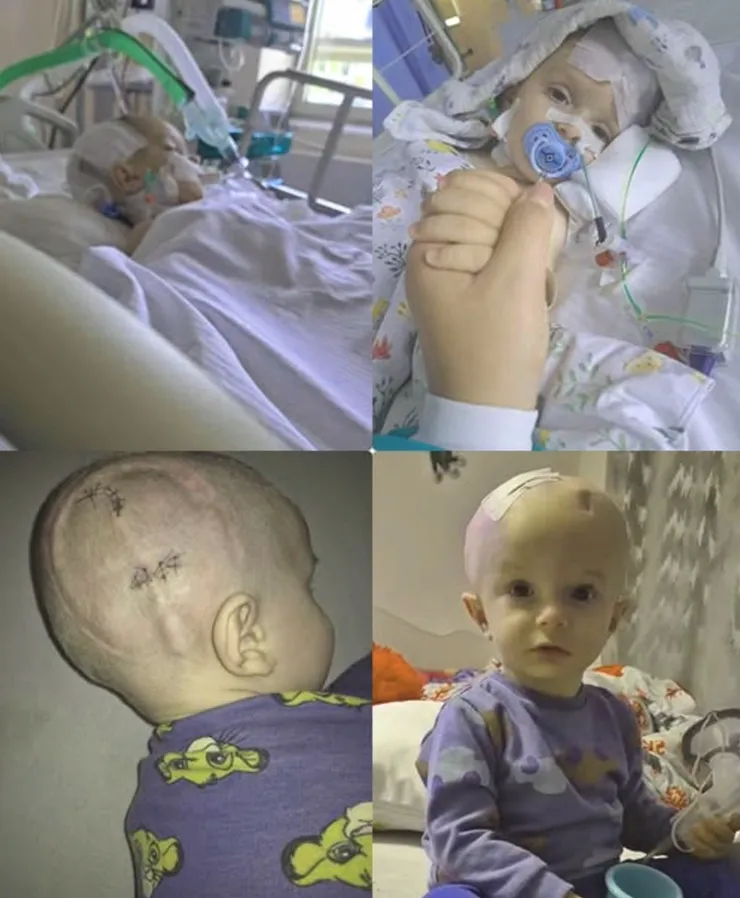
What followed was not one surgery — but two. Delicate, high-risk brain operations that carried unimaginable stakes. During one of them, the unthinkable happened: Tymek’s heart stopped. In that moment, everything paused. Breath was held. Futures trembled. His parents stood on the edge of a nightmare they feared they might never wake from.
But Tymek came back.
His tiny heart beat again. His fragile body endured what it was never meant to endure. And yet, the fight was far from over.
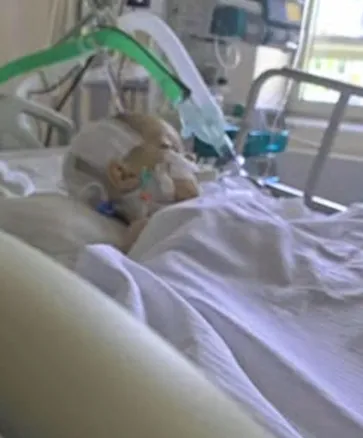
Weeks followed in a haze of machines and silence. Tymek lay in a coma, suspended between worlds, while his parents watched monitors instead of their child’s eyes. Every hour was an act of faith. Every day carried the same question: Will he wake up? They whispered his name, held his hand, and prayed he could feel them — that somehow, love could reach him even there.
In total, Tymek underwent ten operations. Ten times his body was opened, repaired, and stitched back together. Ten times his strength was tested. Each procedure brought new risks, new fear, new scars — both visible and hidden. And through it all, he remained impossibly small, fighting something unimaginably large.
Against the odds, Tymek woke up.
But waking was only the beginning.
The tumor had been removed, but cancer is not a thing that simply disappears and forgets. To keep it from returning, Tymek now faces aggressive chemotherapy — a treatment that takes a heavy toll even on grown bodies, let alone a child who has barely begun to live.
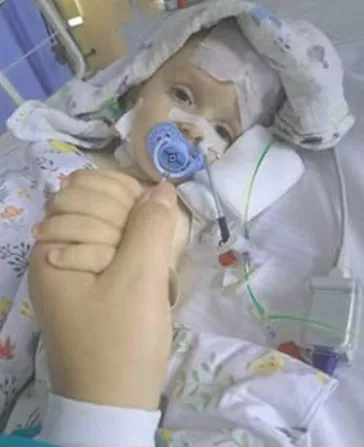
Chemotherapy is not just medicine.
It is exhaustion.
It is nausea.
It is vulnerability layered on top of trauma.
For Tymek, it means more hospital visits, more waiting, more moments where his parents must watch and endure, unable to carry the pain for him. It means trusting that suffering today may protect tomorrow — a bargain no parent ever wants to make.
And yet, here he is.
Tymek is home now.
Home — a word that means everything after months of hospital walls and beeping machines. Home is where healing tries to begin. Where familiar sounds replace alarms. Where his parents can hold him without wires in the way. Where recovery becomes personal, intimate, and painfully slow.
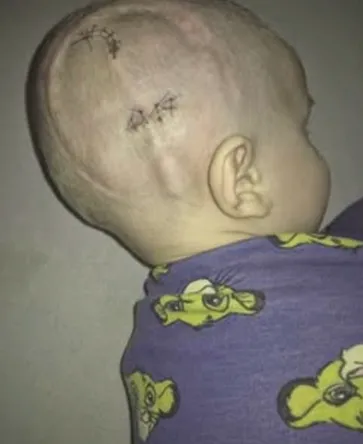
But being home does not mean the battle is over.
Tymek is still fighting.
He is fighting to regain strength.
Fighting to grow into a body that has been pushed beyond its limits.
Fighting for a future that is still uncertain, still fragile, still being written one day at a time.
The tumor is gone — but the road ahead remains long. His development, his health, his tomorrow — all are shaped now by what his body has endured before he even turned two.
And still, there is something extraordinary about Tymek.
Despite everything — the surgeries, the coma, the pain, the treatments — he holds on. He responds to love. He finds moments of light. He reminds everyone around him that survival is not just about beating cancer. It’s about continuing to exist, to feel, to connect.
His parents live in a space few understand. A place where gratitude and fear coexist. Where relief that he survived stands beside the constant worry of what comes next. Where every good day feels like a gift — and every difficult day is endured for the sake of hope.
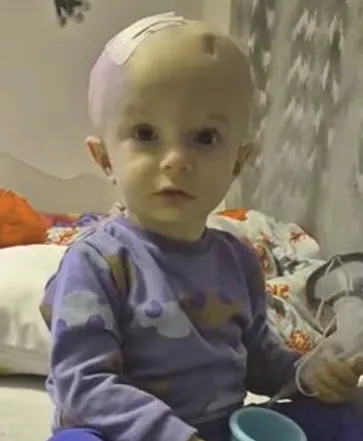
They know this chapter will shape his future.
They also know they cannot predict how.
All they can do is stay.
Advocate.
Love him fiercely.
And believe that the strength that carried Tymek this far will continue to carry him forward.
Tymek did not choose this fight.
But he is fighting it anyway.
Before he could say his first sentence, his body learned resilience. Before he could understand the word “cancer,” he proved that even the smallest lives can hold unimaginable courage.
His story is not finished.
It is still unfolding.
And what comes next — though uncertain — will be written by a child who has already done the impossible: he survived.