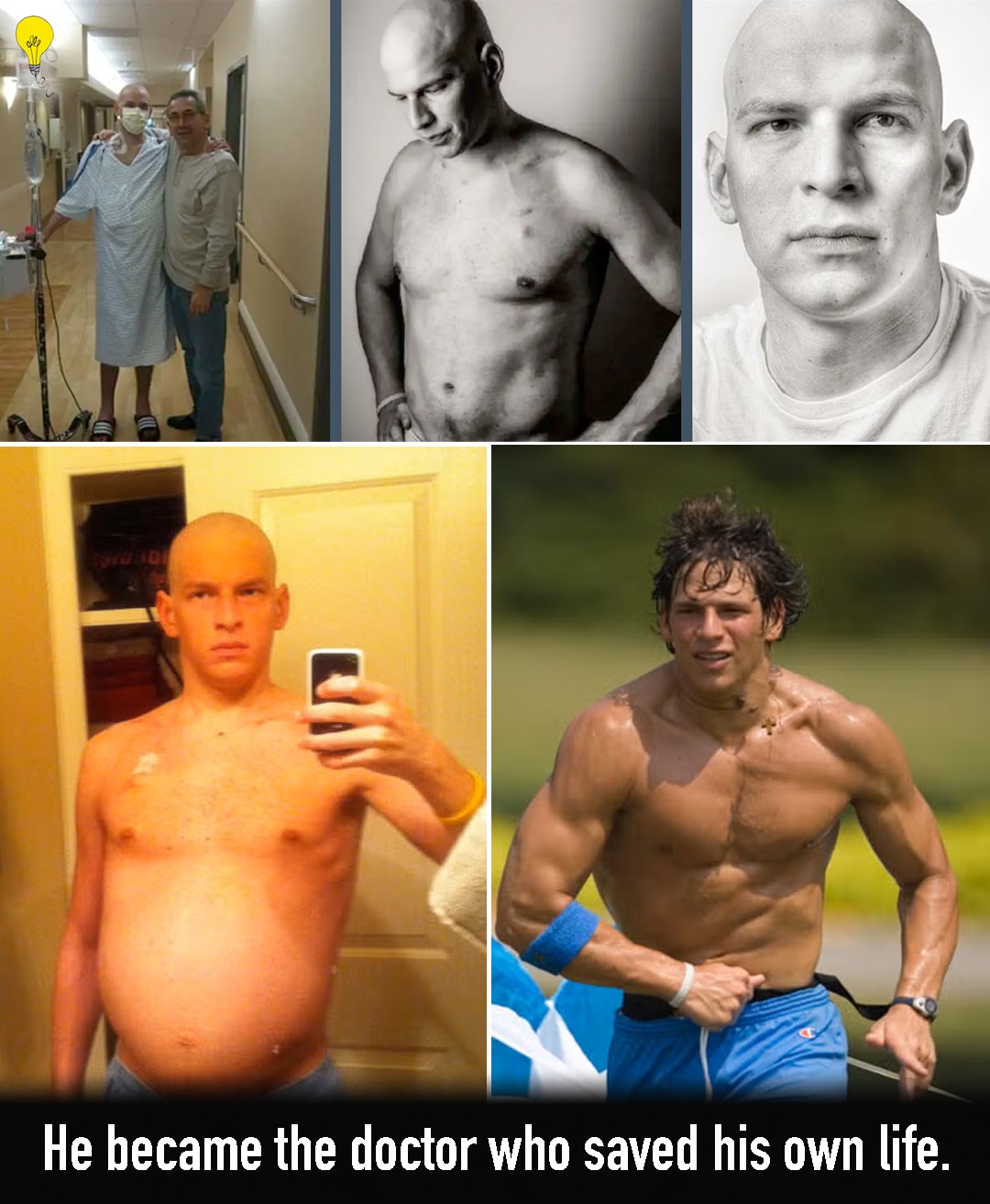
David Fajgenbaum was still a medical student when his life suddenly changed. Unexplained symptoms. Repeated hospitalizations. No clear answers. Eventually, doctors diagnosed him with Castleman disease—a serious and potentially life-threatening condition with limited treatment options.
But instead of waiting… he took action.
From his hospital bed, he began studying medical research, analyzing data, and searching for anything that could help. That’s when he found it. An existing drug—overlooked, but promising. He convinced doctors to try it. And it worked. His condition stabilized, giving him back his life.
But his story didn’t end there. In many ways, it was only the beginning.
What makes David’s journey so extraordinary is not just that he survived, but how he transformed his survival into purpose. After recovering, he didn’t return to a “normal” life. Instead, he chose a path that would place him at the center of a global effort to understand and treat rare diseases. He went on to become both a physician and a scientist, uniquely positioned as someone who had experienced the disease firsthand while also studying it from a clinical perspective.
He enrolled in advanced medical and research training, determined to decode the mystery of the illness that nearly took his life. His dual role—as both patient and researcher—gave him a rare advantage. He understood the urgency, the fear, and the frustration that patients experience when facing a disease with no clear cure. But he also had the scientific tools to dig deeper, to question assumptions, and to explore new possibilities.
David began focusing his research on Castleman disease, working tirelessly to uncover its underlying mechanisms. He collaborated with scientists, doctors, and institutions around the world, building networks that could accelerate discoveries. Over time, his work helped identify potential pathways involved in the disease and opened doors to new treatment strategies.
One of his most impactful contributions was helping to advance the use of repurposed drugs—medications that already exist but can be used in new ways to treat different conditions. This approach is faster and often safer than developing entirely new drugs from scratch. David’s own experience had proven how powerful this strategy could be.
He also founded organizations dedicated to rare disease research, including initiatives that bring together patients, researchers, and clinicians. These platforms allow data and experiences to be shared more efficiently, speeding up the search for treatments. His efforts have not only advanced science but have also created communities of hope for patients who often feel isolated.
Through his advocacy, David has emphasized an important idea: patients can play an active role in their own care and in the broader scientific process. His story challenges the traditional boundaries between doctor and patient, showing that knowledge, determination, and collaboration can lead to breakthroughs.
Despite his progress, David’s journey has not been without setbacks. Castleman disease is unpredictable, and he has faced relapses that brought him back to the edge of life. Each time, he returned to the same mindset—study, analyze, adapt. Instead of losing hope, he used each challenge as fuel to continue his mission.
His work has been recognized globally, and he has become a leading voice in the fight against rare diseases. Yet, he often reminds people that his story is not just about him. It’s about what is possible when science, persistence, and human resilience come together.
Today, David continues to lead research efforts, mentor young scientists, and advocate for patients worldwide. His life stands as a powerful example of how adversity can be transformed into impact. He didn’t just survive a life-threatening illness—he turned it into a catalyst for change that could help countless others.
There is something deeply inspiring about the idea that a patient, lying in a hospital bed, could challenge the limits of medicine and contribute to their own survival. It reminds us that innovation doesn’t always come from laboratories alone—it can come from lived experience, from urgency, and from the refusal to give up.
David’s journey also highlights a larger issue in modern healthcare: the gap in research and treatment for rare diseases. Millions of people around the world suffer from conditions that receive little attention or funding. By shining a light on these challenges, he has helped bring attention to a field that desperately needs more resources and collaboration.
His story encourages a new way of thinking—not just for patients, but for doctors, researchers, and policymakers. It shows that solutions can come from unexpected places, and that sometimes, the person closest to the problem is also closest to the solution.
In a world where many people feel powerless in the face of illness, David’s story offers a different perspective. It shows that even in the darkest moments, there is room for action, for curiosity, and for hope.
Because sometimes…
The person searching for the cure becomes the reason it’s found.
And sometimes, the greatest breakthroughs begin not in a lab, but in a moment of desperation—when someone decides that giving up is not an option.
David Fajgenbaum’s life is a testament to that decision.