There are days that slip quietly into memory, and then there are days that divide life into before and after. For Sutton’s family, that day arrived without warning, disguised as an ordinary afternoon. There were familiar sounds in the house, small footsteps, the soft rhythm of routine. Nothing about it hinted at the terror that would unfold in seconds.
It happened so fast.
A pot of boiling water. A split-second accident. A scream that did not sound like any other cry her parents had ever heard.
In that instant, time fractured. The normal noise of the home was replaced by panic, by the kind of fear that grips your chest so tightly you forget how to breathe. Sutton’s tiny body had been burned, her delicate skin scalded by water that had no mercy. Her cries were sharp and desperate, and every instinct in her parents surged at once — protect her, save her, make it stop.
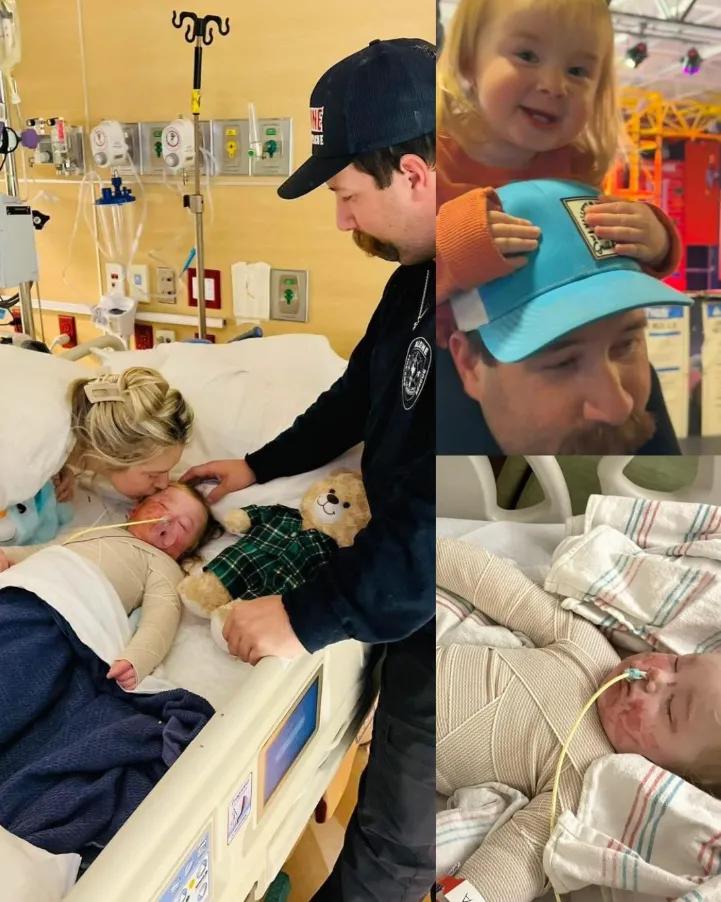
They rushed her to the hospital, hearts pounding, minds racing. There is no training for watching your child in that kind of pain. No preparation for seeing red, blistering skin where softness once was. The drive felt endless and instantaneous at the same time, a blur of prayer and pleading.
At the hospital, everything moved quickly. Nurses and doctors surrounded her, assessing the burns, speaking in urgent but steady voices. Words like “second-degree,” “surgery,” and “skin graft” filled the room. Words that do not belong in the same sentence as “toddler.” Words that shattered the illusion that this would be simple.
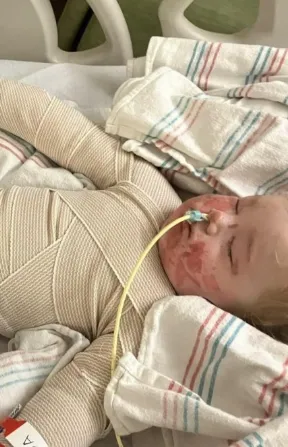
Sutton was admitted immediately. IV lines were placed. Pain was managed as carefully as possible. Bandages wrapped around her small body, covering wounds no child should ever endure. Machines began their quiet beeping, marking time in a new and frightening way.
That first night was long.
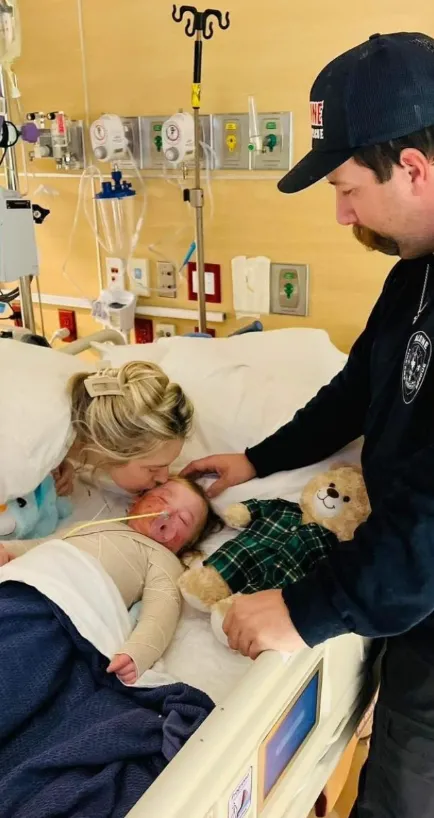
Her parents sat beside her hospital bed, afraid to blink, afraid to step away even for a moment. They watched her chest rise and fall, grateful for every breath. They held her hand carefully, mindful of the dressings, whispering reassurances they hoped she could feel even when exhaustion pulled her under.
Surgery came quickly.
The burns required a skin graft — a procedure delicate and serious, designed to help her body heal where the damage was deepest. As she was wheeled down the hallway, her parents walked beside her until they were told to stop. Then they waited in that quiet, unbearable space known too well by families in crisis.
Minutes stretched into hours. Every time the surgical doors opened, their hearts leapt.
When the surgeon finally came to speak with them, the words they had been holding their breath for arrived: the procedure had gone well. Relief washed over them in waves so strong it nearly knocked them over. But relief did not erase fear. Healing would take time. Recovery would not be easy.
Burn recovery is not a straight line.
There are painful dressing changes that test even the strongest spirit. There are moments when discomfort returns like a shadow. There are nights where sleep feels impossible and days where exhaustion settles deep into the bones of everyone involved.
May you like
And yet — Sutton keeps fighting.
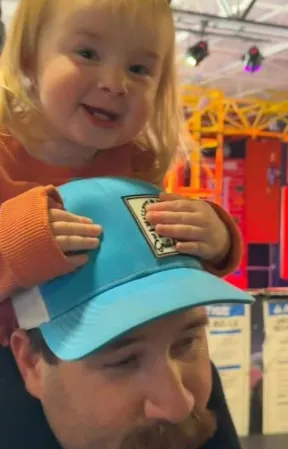
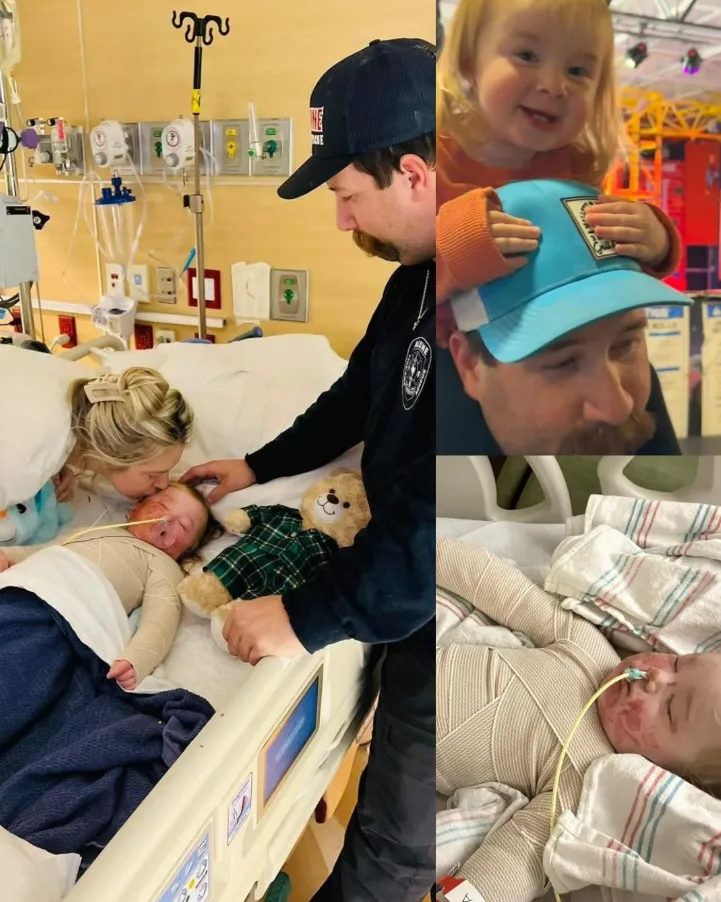
In the middle of tubes and bandages, her spirit has not dimmed. She squeezes her mother’s finger. She leans into her father’s touch. She rests her head near a stuffed teddy bear placed gently by her side. Small gestures, but monumental in meaning.
Her sister leans over the hospital bed to kiss her forehead. Her father stands steady and protective, absorbing what he can so she doesn’t have to carry it alone. Her mother memorizes every tiny improvement — the way the swelling decreases, the way the graft begins to take, the way her little body shows signs of repair.
Outside the hospital walls, love has been pouring in. Messages from friends. Prayers from strangers. Meals delivered. Encouragement shared. In moments when fear threatens to take over, that community becomes a lifeline.
Because this is not just Sutton’s fight. It is her family’s. It is the doctors’ and nurses’ dedication. It is the quiet faith that holds steady when nothing feels certain.
There will be follow-up appointments. There will be scars. There may be questions in the future when she is old enough to ask what happened. But those scars will not define her.
They will tell a story.
A story of survival.
A story of a small girl who endured surgery and pain and came through it still brave. A story of parents who discovered strength they never knew they possessed. A story of how fragile life is — and how fiercely it can hold on.
Sutton’s journey is not over. Healing continues in careful steps. Each new day is measured not by what was lost, but by what has been regained — movement, comfort, trust, calm.
She walked through something that could have broken her.
Instead, she is healing.
And in that healing, she is teaching everyone around her that courage does not always roar. Sometimes, it lies quietly in a hospital bed, wrapped in bandages, holding on — one breath at a time.
They Never Made a 911 Call — And Two One-Month-Old Twins Paid the Price 6707
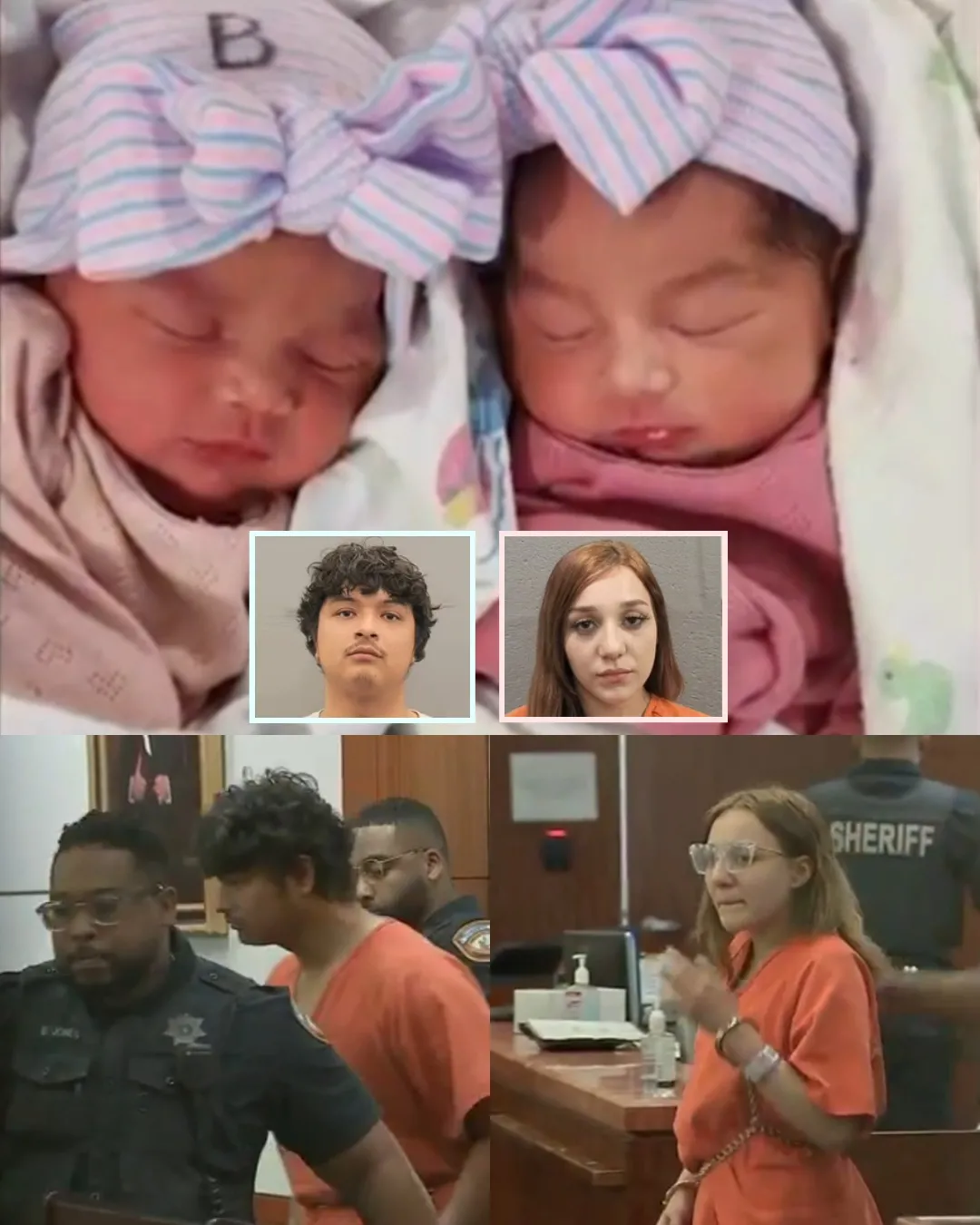
There were no frantic calls in the middle of the night. No panicked voice telling an operator, “Please hurry.” No neighbor hearing screams and dialing for help. No moment when someone stood up and said, “Something is wrong.”
Instead, prosecutors say the harm unfolded quietly.
Two one-month-old twins — infants too small to lift their own heads, too young to focus their eyes clearly — were allegedly hurt again and again over time. Not in one explosive incident. Not in a single tragic accident. But in a pattern. A series of injuries so severe and so repeated that they should have been impossible to miss.