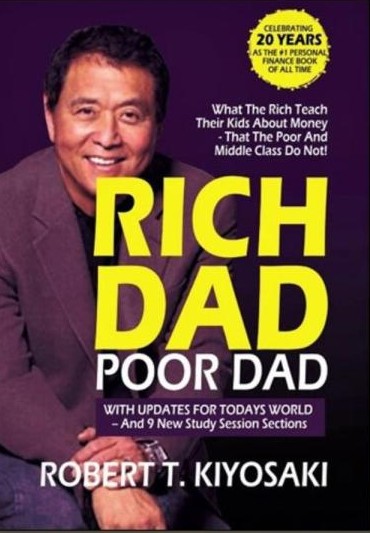
Rich Dad Poor Dad is a personal finance book by Robert Kiyosaki that focuses on financial education and mindset rather than traditional ideas about work and money. The author compares the financial philosophies of two father figures in his life: his biological father, called the “Poor Dad,” and the father of his best friend, called the “Rich Dad.”
The Poor Dad represents the traditional way of thinking about money. He believed that success comes from studying hard, getting good grades, finding a stable job, and working for a salary. He valued job security, avoided financial risks, and believed that money problems could be solved by earning more through work. Despite being well educated, he struggled financially.
In contrast, the Rich Dad believed that schools do not teach people how to manage money. He emphasized the importance of financial education, investing, and entrepreneurship. Instead of working for money, he taught that people should learn how to make money work for them. His mindset focused on opportunity, learning, and long-term wealth building.
One of the central concepts of the book is the difference between assets and liabilities. Kiyosaki defines assets as things that put money into your pocket, such as businesses, rental properties, stocks, or investments. Liabilities are things that take money out of your pocket, such as loans, debts, or expensive items that do not generate income. According to the author, many people mistakenly think their house or car is an asset, while in reality it often costs money instead of producing it. Wealthy people focus on acquiring assets, while most people accumulate liabilities.
Another key idea is that working hard for a salary is not enough to become financially free. Most people live in a cycle where they work to earn money, pay bills, and then repeat the process. As income increases, expenses also increase. Kiyosaki calls this the “rat race.” To escape it, individuals need to create multiple sources of income through investments and businesses.
The book also highlights the role of fear and failure. Many people avoid investing or starting a business because they are afraid of losing money or failing. Kiyosaki argues that failure is a valuable teacher and that successful people learn from their mistakes instead of avoiding risks entirely.
Finally, Rich Dad Poor Dad stresses the importance of developing skills such as accounting, investing, understanding markets, and managing businesses. Financial freedom, according to the book, comes from knowledge, discipline, and the right mindset—not just from earning a high income.
In conclusion, the main message of Rich Dad Poor Dad is that financial success depends more on how you think about money than how much you earn. By focusing on financial education, building assets, and adopting a proactive mindset, individuals can work toward long-term financial independence.