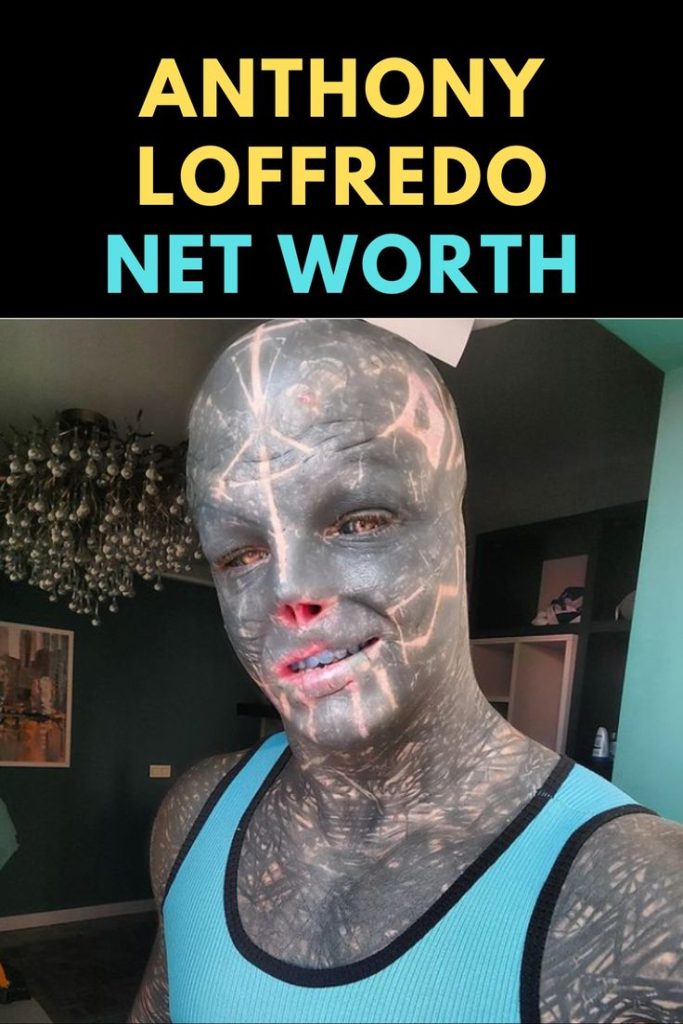
Anthony Loffredo is one of the most controversial and talked-about figures in the world of extreme body modification. Known globally as “The Black Alien Project,” he is a man who made the radical decision to transform his body to resemble what he believes an alien being might look like. His story is not only about physical transformation, but also about identity, freedom, and the limits of social acceptance.
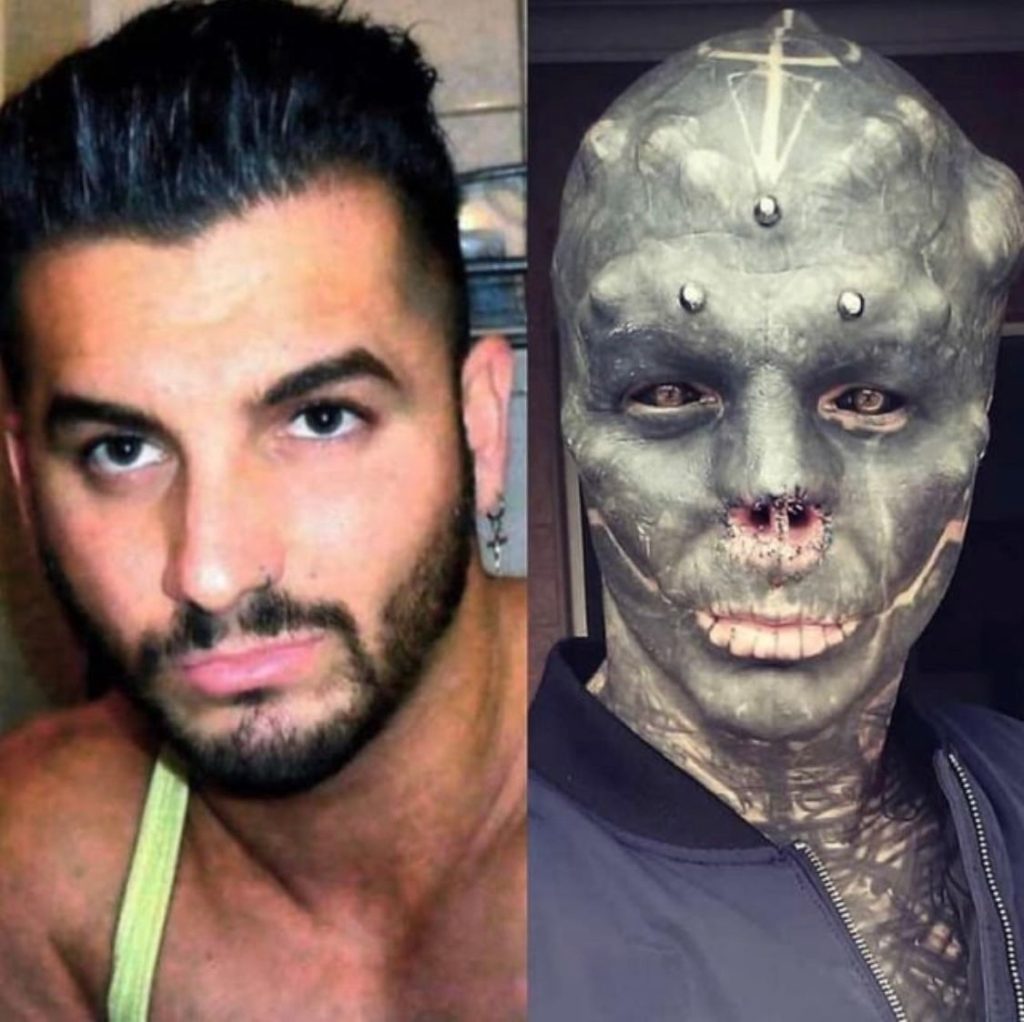
Anthony Loffredo was born in France and lived a relatively normal life before beginning his transformation. He worked as a security guard and had an athletic body that fit society’s conventional standards of appearance. However, despite this outward normality, Anthony felt deeply uncomfortable in his own skin. He has stated in interviews that he never truly felt like himself and believed his body did not represent who he really was inside.
This inner conflict led him to start what he later named “The Black Alien Project.” His goal was clear: to completely abandon human appearance and create a new identity through extreme body modifications. For Anthony, this was not about fashion, trends, or shocking others—it was a personal journey toward self-expression and authenticity.
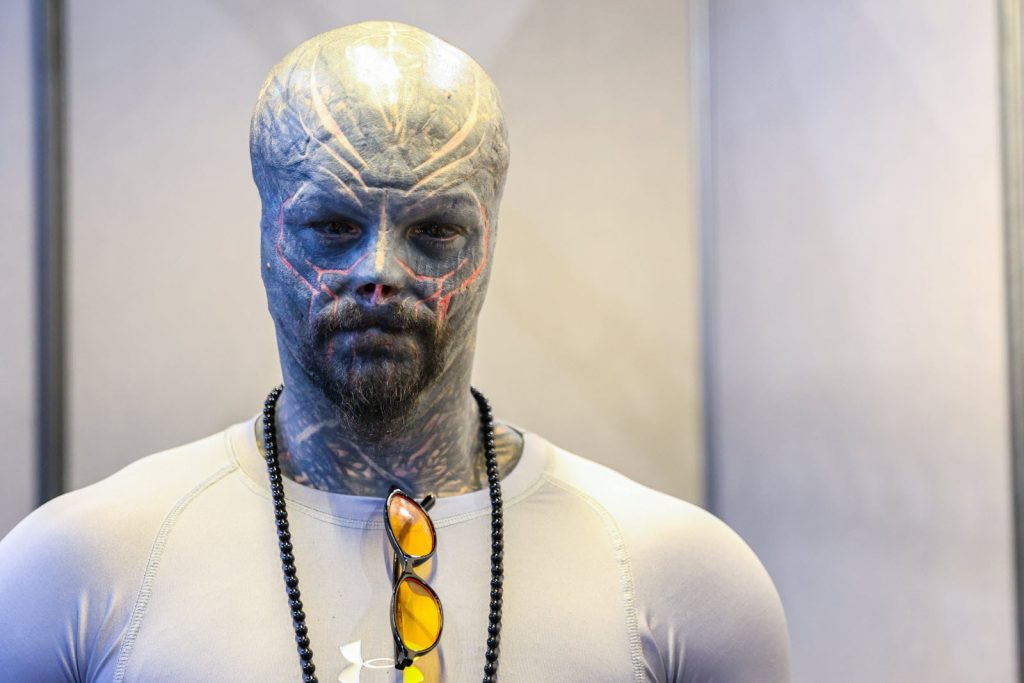
Over the years, Anthony has undergone numerous drastic and irreversible modifications. These include covering most of his body with black tattoos, surgically removing parts of his nose, splitting his tongue in half, removing his upper lip, and altering his eyes. He has also implanted structures under his skin to change the shape of his head and face. According to Anthony, he has completed more than 60% of his planned transformation and intends to continue.
Anthony considers his body a living artwork. He believes that human beings should have full control over their bodies and the right to modify them as they wish. In his view, the body is simply a shell that can be reshaped to reflect one’s true identity. He often emphasizes that his decisions are conscious and carefully considered, not impulsive or driven by mental illness.
Despite his confidence, Anthony’s transformation has come with significant challenges. He faces constant public attention, judgment, and criticism. Many people react with fear or disgust when they see him, and others openly insult or mock him. In some cases, he has reportedly been denied entry into certain countries because of his appearance. Everyday activities, such as shopping or walking in public spaces, can become uncomfortable or even dangerous.
The public reaction to Anthony Loffredo raises important questions about society’s ability to accept difference. While some admire his courage and view him as a performance artist or philosopher challenging social norms, others see him as a symbol of self-destruction. Critics argue that his modifications are harmful and dangerous, both physically and psychologically. Medical professionals have warned about the health risks involved, including infections, nerve damage, and long-term complications.
Mental health is another topic often discussed in relation to Anthony’s choices. Many people assume that someone willing to alter their body so extremely must be suffering from a psychological disorder. Anthony strongly rejects this assumption. He insists that he is mentally stable, self-aware, and happy with his decisions. For him, the real problem lies not in his appearance, but in society’s refusal to tolerate difference.
At the center of Anthony Loffredo’s story is a powerful philosophical debate: Where does personal freedom end? Should individuals be allowed to do whatever they want with their bodies, even if it shocks or disturbs others? Or does society have the right to define limits in the name of safety, morality, or social order?
Anthony firmly believes that personal freedom should come first. He argues that as long as his actions do not harm others, no one has the right to judge or control his choices. His life challenges traditional ideas of beauty, normality, and humanity itself. By pushing boundaries, he forces people to reflect on why they feel uncomfortable with difference.
In conclusion, “The Man Who Became an Alien” is more than a story about extreme body modification. Anthony Loffredo represents a radical form of self-expression and raises difficult questions about identity, freedom, and acceptance in the modern world. Whether viewed as an artist, a rebel, or a misunderstood individual, his story cannot be ignored. It reminds us that being “normal” is often a social construction—and that true freedom sometimes comes at a very high personal cost.